Best Educational Apps for Kids in 2026: Top 5 Picks (Safe & Ad-Free)

Update Feb 2026

Looking for the best kids’ educational apps in 2026? Discover our top 5 picks to boost learning. Safe, ad-free, and free to try. Start now!

In today’s digital age, parents are often overwhelmed by the sheer number of educational apps available for children. With so many claiming to be “educational,” it can be hard to determine which ones truly deliver quality content.

Are they all genuinely educational? Which ones stand out in terms of content quality, price, and safety? To help parents make informed choices, we’ve compiled a list of the best educational apps in the USA for 2026.

Top Educational Apps for Kids in 2026

  • Our Top Pick: Smart Tales – The All-in-One Learning App
    Smart Tales has taken the kids app market by storm in 2024, offering an innovative approach to learning for children aged 2-11. What sets Smart Tales apart is its unique combination of storytelling, interactive games, and educational content that covers the full school curriculum for math and science. With captivating characters, vibrant animations, and engaging activities, Smart Tales encourages active participation, making learning fun and effective. It’s a comprehensive tool for parents seeking an app that grows with their child. The app costs $4.58 per month and is available for download on the App Store and Google Play.
    Rating: 4.8


  • ABCmouse
    ABCmouse continues to be a popular choice for younger children, with a curriculum that spans reading, math, science, and art. Designed for children aged 2-8, it uses a step-by-step learning path to guide kids through activities that build foundational skills. Its affordability, with monthly subscription options starting at $12.99, and a vast library of over 10,000 activities make it a solid choice for early learners.
    Rating: 4.49


  • Khan Academy Kids
    Khan Academy Kids is an excellent free app designed for children ages 2-8. It offers a wide range of interactive lessons and activities that cover key areas like literacy, math, and problem-solving. The app stands out for its adaptive learning technology, which tailors the content to each child’s needs. Its strong emphasis on safety, with no ads or in-app purchases, makes it a top pick for budget-conscious parents.Rating: 4.82


  • Prodigy Math Game
    Prodigy Math Game turns math practice into a magical adventure. Geared towards kids in grades 1-8, Prodigy offers a gamified experience where children solve math problems to progress through various levels of a fantasy world. The basic version of the app is free, but additional features and rewards are available through a premium membership starting at $9.95 per month.
    Rating: 4.7


  • Endless Alphabet
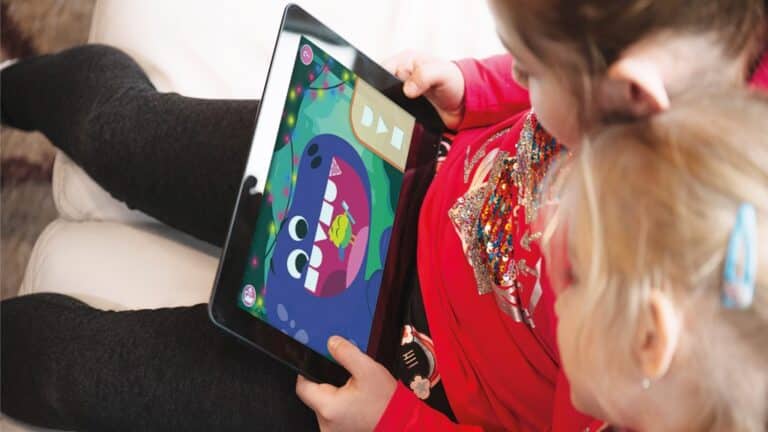
    Endless Alphabet is perfect for early readers, teaching children aged 3-5 the basics of phonics and letter recognition. Through fun and quirky monsters, kids learn new vocabulary and the sounds of letters in a playful, interactive way. Priced at $8.99 as a one-time purchase, this app is both educational and entertaining, without recurring subscription fees.
    Rating: 4.7

Why Smart Tales Stands Out

Smart Tales isn’t just an educational app—it’s a powerful companion for kids. With a dedicated Parents’ Area, you can easily track your child’s progress and discover their strengths, whether it’s in math, science, or creative activities. Unlike other apps that focus on just one subject, Smart Tales covers a broad range of learning areas through engaging stories and interactive games. Plus, its ad-free environment ensures your child’s safety while learning. Whether your little one is just starting out or already curious about the world, Smart Tales makes it easy to nurture their passions and potential!

Want to learn more? Check out our article on the 10 Reasons Why Smart Tales Is the Perfect App for Your Child

Frequently Asked Questions About Educational Apps for Kids

How do I know if an educational app is actually teaching my child something?

Look for apps that align with school curricula and track your child’s progress. A genuinely educational app should cover measurable skills like numeracy, literacy or logical thinking, and offer a parent dashboard where you can see what your child has learned, how long they played, and which areas need improvement. If an app has no progress tracking, it’s entertainment, not education.

A truly ad-free app contains no banner ads, no video ads, and no sponsored content of any kind. Be careful: some apps claim to be ad-free but still include in-app purchase prompts or links to external content. A genuinely safe app for children should also have no external links, no social features, and full COPPA compliance.

It depends on the app. Safe apps for unsupervised use should be fully closed environments with no access to the internet, no chat features, no external links, and no ads. Always check if the app is COPPA-compliant and whether it offers a parent-controlled area separate from the child’s experience.

A learning app is designed around educational outcomes first, using gameplay as a vehicle for skill development. A gaming app is designed around engagement and retention, sometimes with educational content added as a secondary layer. The key difference is intent: in a learning app, your child finishes a session having practiced a real skill. In a gaming app, they finish having had fun, which may or may not include learning.

Yes. Quality educational apps require significant investment in content development, curriculum design, child safety standards and ongoing updates. Free apps typically offset these costs through ads or data collection, which are not appropriate for young children. The good news is that most premium educational apps offer a free trial period, which gives you a risk-free way to evaluate the content quality, your child’s engagement, and whether it fits your family’s needs before committing to a subscription.

Picture of Dott.ssa Marianna Pappalardi

Dott.ssa Marianna Pappalardi

Speech-Language Pathologist and Digital Education Expert. With over 10 years of clinical experience supporting neurodivergent children and 15 years dedicated to crafting digital educational content, she stands at the forefront of therapeutic technology.
She has collaborated on strategic projects with UNICEF and Earth Day Italia, and designed interactive experiences for industry leaders such as Clementoni and Coccole Sonore. Her expertise has been pivotal in the development of educational apps that currently empower over 5 million children worldwide to learn through play.
Articles suitable for you